
If Genesis tells us who God is, Exodus shows us what He does.
Because the God of Genesis, the one who created everything, made covenants with Abraham and brought Joseph through the pit and the prison to the palace, that same God shows up in Exodus with His sleeves rolled up. He parts seas, sends plagues and even speaks from a burning bush. He feeds a nation in a desert with bread that appears every morning like clockwork.
Exodus is the book where God acts. Where He delivers. Where He shows up in the impossible and does what no one believed could be done.
And it is one of the most relevant books in the Bible for the Christian woman who is sitting in her own impossible season right now, wondering if God sees her, if He is moving and if things are ever going to change.
He saw Israel in Egypt. He sees you now. And Exodus is the proof.
What Is the Book of Exodus?
Exodus is the second book of the Bible and the second of the five books of Moses. The word Exodus comes from the Greek meaning departure or going out, and that is exactly what the book is about. The departure of an entire nation from four hundred years of slavery in Egypt toward the land God had promised them.
But Exodus is so much more than an escape story. It is the book where God reveals His name: I AM THAT I AM, for the first time. Where the covenant relationship between God and His people is formalised at Mount Sinai. Where worship is given structure and the tabernacle, the dwelling place of God among His people, is built.
It is a book about identity as much as it is about deliverance. Israel enters Exodus as a nation of slaves. They leave as a people who know their God, have heard His voice and have seen His glory.
That transformation, from slave to free, from forgotten to known, from wandering to purposeful, is exactly what God does. In Exodus and in every life He touches.
If you haven’t started with Genesis yet, the book that lays the foundation for everything Exodus builds on, this complete Genesis Bible study guide is the place to begin.
How to Get the Most Out of Your Exodus Study
The same principles that served you well in Genesis will serve you here, but Exodus has a few specific things worth knowing before you begin.
Read it as a continuous story first.
Exodus has narrative sections and legal sections, and it is tempting to slow down so much in the legal parts that you lose the momentum of the story. Read it through once fairly quickly to get the sweep of the whole thing. Then go back and study the sections that called to you.
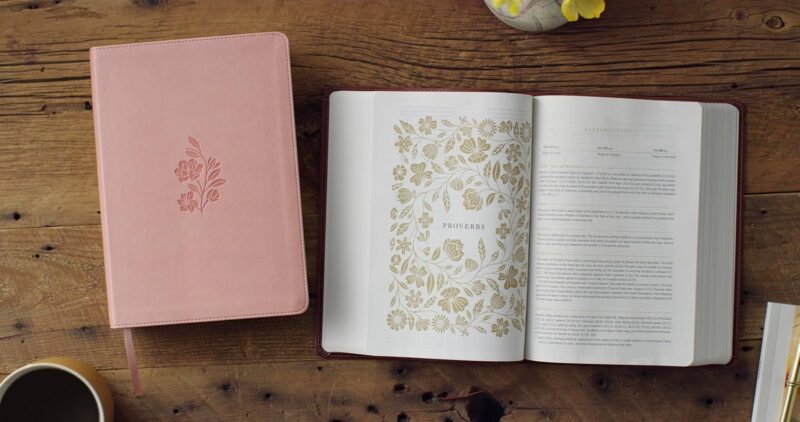
A good study Bible is essential here.
The cultural and historical context of Exodus: Egyptian history, ancient Near Eastern covenant structures, the significance of the tabernacle measurements, is the kind of thing that a study Bible unlocks beautifully. Without it, you can still read the story, but with it, you see layers you would never find on your own.
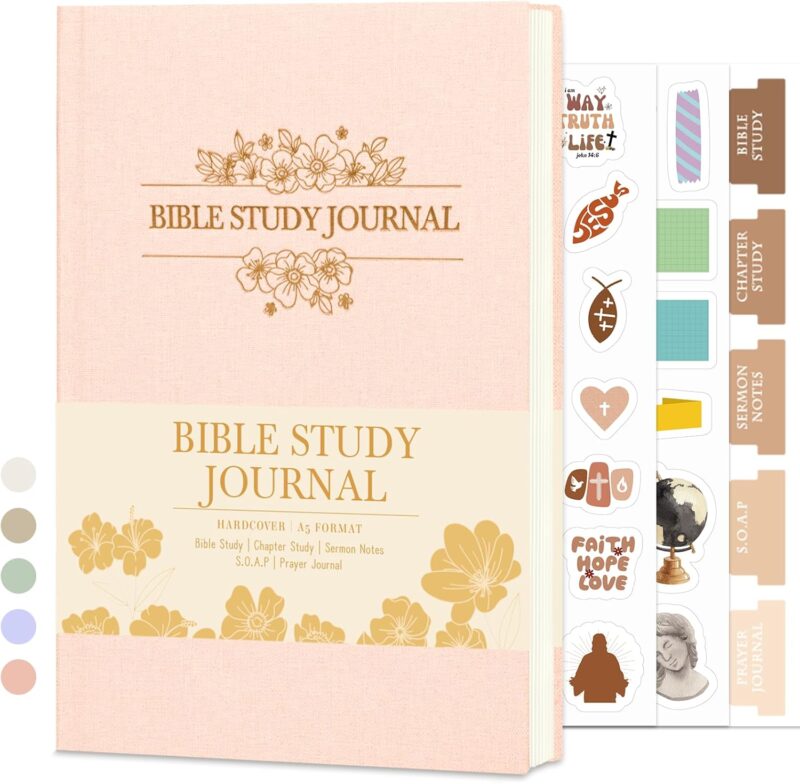
Use a journal.
Exodus raises enormous questions about faith, suffering, obedience and God’s character. A journal kept alongside your reading gives those questions somewhere to live and lets you record what God is showing you as the study unfolds.
Colour code your themes.
Exodus has several major themes running simultaneously: deliverance, presence, obedience, worship, provision, and tracking them with different Bible highlighter colours as you read is one of the most rewarding things you can do. By the end, you will have a visual map of how God’s character is revealed across 40 chapters.

Get good pens.
Your Bible is a living document of your conversation with God over time. Invest in Bible journaling pens that make you want to write in it.

Go slowly.
Exodus rewards the reader who is not in a hurry. The burning bush deserves more than a paragraph. The Red Sea deserves more than a chapter summary.
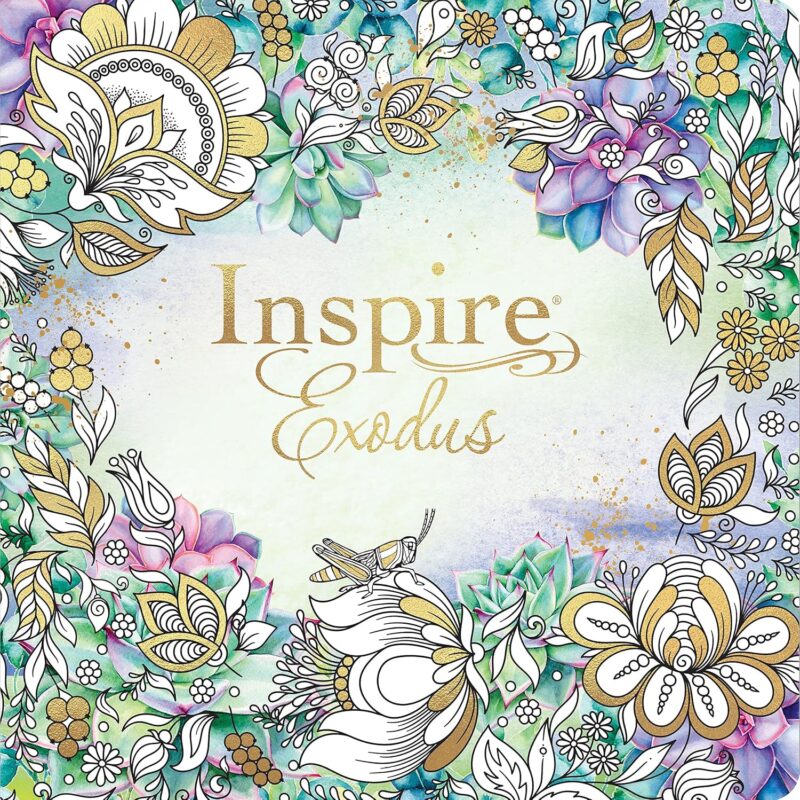
If you want a more creative way to engage with the themes and imagery of Exodus, a colouring book designed specifically around this book is something I’d genuinely recommend. There is something meditative about colouring through the stories and scenes of Scripture that lets truth settle in a different way than reading alone does. It’s also just genuinely beautiful to do alongside your study. This one is my current favourite for Exodus.
The Structure of Exodus
Exodus divides naturally into three main sections:
Chapters 1-18, Deliverance from Egypt: The birth of Moses, his calling at the burning bush, the ten plagues, the Passover, the crossing of the Red Sea and the journey into the wilderness. This is the dramatic heart of the book, the part most people know.
Chapters 19-24, The Covenant at Sinai: God meets Israel at the mountain. He gives the Ten Commandments and the law. Israel agrees to the covenant. This section transforms Israel from a delivered people into a covenant people, ones who not only know God has saved them but know how He calls them to live.
Chapters 25-40, The Tabernacle: Detailed instructions for building the tabernacle, God’s dwelling place among His people. This section can feel slow to modern readers, but it is theologically rich. God is not asking Israel to build Him a house because He needs one. He is making a way to live among them. The whole point is presence: His presence with His people.
Key Themes in Exodus
Deliverance
The central event of Exodus, and arguably of the entire Old Testament, is the Exodus itself. God hears His people crying out in slavery, and He acts. He sends Moses, sends plagues, He parts the Red Sea and He delivers.
This deliverance becomes the defining story of Israel’s identity. For centuries afterwards, when God wants to remind His people who He is, He says: I am the Lord your God who brought you out of Egypt. Out of the house of slavery.
For the Christian woman, this is deeply personal. The God who delivered Israel is the same God who delivers. Whatever Egypt you are standing in, whatever feels like it will never change, Exodus is the testimony that God hears, God sees, and God acts.
God’s Presence
One of the most striking things about Exodus is how desperately God wants to be with His people. The entire final section of the book, fifteen chapters of detailed tabernacle instructions, exists because God wants to dwell among them.
The cloud by day and the pillar of fire by night. The glory filling the tabernacle. Moses talking with God face to face as a man speaks with a friend. Exodus is saturated with God’s desire for closeness with His people.
“My presence shall go with thee and I will give thee rest.” Exodus 33:14
This promise was spoken to Moses in a moment of great uncertainty. It belongs to every believer who has ever stood at a threshold not knowing what was on the other side. If you want to go deeper into what the Bible says about rest and why it matters for your everyday life as a Christian woman, this article explores exactly that.
Obedience and Covenant
At Sinai God gives Israel the law, not as a burden but as the terms of a relationship. The Ten Commandments are not a list of rules imposed on strangers. They are the covenant obligations of a people who have been rescued by a God who loves them.
Understanding this reframes the law completely. God is not saying: earn my love by keeping these. He is saying: you are already mine, this is how my people live.
Worship
Exodus ends with worship. The tabernacle is built, the glory of God fills it, and Israel has a place to meet with their God. Miriam leads the women in worship and dancing after the Red Sea. Moses intercedes for the people after the golden calf. Worship, in all its forms, formal and spontaneous, joyful and desperate, runs through Exodus like a thread.
My Favourite Faith Jewellery Right Now
There is something quietly powerful about wearing your faith, just a small reminder on your wrist or around your neck or on your finger of whose you are and what you believe. Especially in a book like Exodus, where identity is everything, where God calls a nation of slaves to remember they are His people, wearing a small visible declaration of faith feels entirely right. Here are three pieces I’d genuinely recommend:
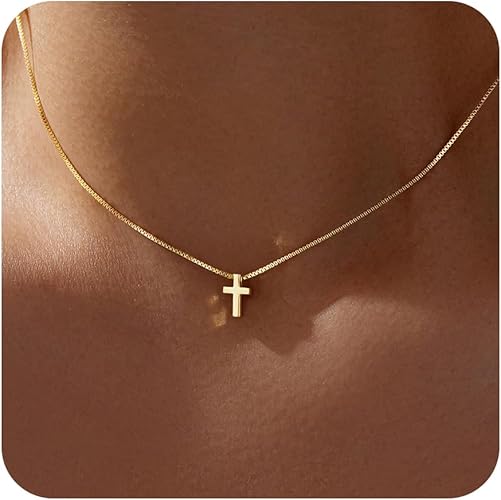
✝️ Dainty 14K Gold Silver Plated Cross Necklace — delicate enough for everyday wear, meaningful enough to matter
💍 14K Gold Silver Plated Cross Ring — a quiet declaration on your hand every time you reach for something
📿 Dainty Adjustable Initial Cross Bracelet — stack it, wear it alone or give it to someone who needs the reminder
The Women of Exodus
Exodus has some of the most extraordinary women in all of Scripture. Three in particular deserve their own moment:
Jochebed: The Mother Who Trusted God With the Unthinkable
Jochebed is Moses’ mother and one of the most courageous women in the Bible. When Pharaoh ordered every Hebrew baby boy to be thrown into the Nile, Jochebed hid her son for three months. When she could hide him no longer, she did something that should have broken her, she built him a small ark of bulrushes, placed him in the river and let him go.
She trusted God with the child she could not protect.
And God, being God, arranged for Pharaoh’s own daughter to find the baby, have compassion on him and then call for a Hebrew nurse. The nurse who came was Jochebed herself. God gave her son back to her arms to raise.
“She took for him an ark of bulrushes and daubed it with slime and with pitch and put the child therein and she laid it in the flags by the river’s brink.” Exodus 2:3
Jochebed’s story is for every woman who has ever had to release something precious into God’s hands and trust that He will hold what she cannot. She let go so God could hold him. And He did.
Miriam: The Prophetess Who Led Israel in Worship
Miriam first appears in Exodus as a young girl standing at the river’s edge watching over her baby brother. By the time the Red Sea parts, she has grown into one of the leaders of Israel: a prophetess, a worship leader and a woman with a voice.
After the crossing, Miriam took a timbrel in her hand and led every woman in Israel in worship and dancing on the other side of the sea. It is one of the most joyful moments in Scripture, and she is right at the centre of it.
“And Miriam the prophetess the sister of Aaron took a timbrel in her hand and all the women went out after her with timbrels and with dances.” Exodus 15:20-21
Miriam’s story also includes failure, she challenged Moses’ authority and faced discipline from God. But she was restored. The women of Israel waited for her before they moved on. Her story is for every woman who leads, who worships, who fails and who needs to know that God restores what He corrects.
Pharaoh’s Daughter: The Woman Who Didn’t Know She Was Saving a Nation
She is unnamed in Scripture. We don’t know what she believed or what she prayed or whether she had any sense at all of what she was doing when she reached into the water and pulled out a Hebrew baby.
She just had compassion.
She adopted Moses as her own son, gave him a name and raised him in Pharaoh’s palace, which gave him the education, the language and the access that would one day allow him to stand before the most powerful man in the world and say: “Let my people go.”
“And she called his name Moses and she said Because I drew him out of the water.” Exodus 2:10
Pharaoh’s daughter did not know she was saving a nation. She just did the compassionate thing in front of her. Her story is for every woman who wonders whether the small act of kindness she’s considering actually matters. It does. You don’t have to know the whole plan to play your part in it.
Key Verses in Exodus
Here are the verses worth marking, memorising and returning to:
- Exodus 3:14: “I AM THAT I AM”, God reveals His name and His nature.
- Exodus 14:13: “Fear ye not, stand still and see the salvation of the Lord”, spoken at the Red Sea, relevant in every impossible season.
- Exodus 14:14: “The Lord shall fight for you and ye shall hold your peace”, permission to stop striving.
- Exodus 20:2: “I am the Lord thy God which have brought thee out of the land of Egypt”, identity before instruction.
- Exodus 33:14: “My presence shall go with thee and I will give thee rest”, the promise of presence for every new season.
- Exodus 40:34: “Then a cloud covered the tent of the congregation and the glory of the Lord filled the tabernacle”, the arrival of God’s presence as the book’s culmination.
The Burning Bush: God Meets You in the Ordinary
One of the most important moments in Exodus, and honestly in the entire Bible, happens in a field. Moses is doing his ordinary work, keeping his father-in-law’s flocks, when something catches his eye. A bush that is burning but not being consumed.
He turns aside to look.
And God speaks.
God didn’t wait for Moses to have it all together before He showed up. He didn’t wait for Moses to be in a temple or on his knees or in a particularly spiritual frame of mind. God met him in the middle of an ordinary day in an ordinary field doing ordinary work.
He still works the same way.
The burning bush is the reminder that God can show up in any moment of your ordinary life. The question Exodus asks is the same one it asked Moses: Will you turn aside to look?
The Red Sea: When the Way Forward Looks Impossible
Israel stood at the Red Sea with Pharaoh’s army behind them and water in front of them, and no way through.
Moses told them to stand still and see the salvation of the Lord.
And then God parted the sea.
But here is the detail that matters. The sea didn’t part before Israel stepped toward it. The waters moved when Moses stretched out his hand over them, when the action of faith preceded the evidence of deliverance.
Sometimes God waits until your feet are at the water’s edge before He moves. That is the difference between a faith that believes God can and a faith that acts as though He will.
Exodus invites you to step toward your Red Sea.
How to Study Exodus: A Simple Plan
Week 1: Exodus 1-12
The call of Moses and the plagues. Journal what you learn about God’s character. What does He reveal about Himself through each plague? What does Moses’ reluctance teach you about how God uses imperfect people?
Week 2: Exodus 13-18
The Exodus and the wilderness. Track the theme of God’s provision. How does He provide physically, practically and spiritually for Israel in the desert?
Week 3: Exodus 19-24
The covenant at Sinai. Read the Ten Commandments slowly. What do they reveal about how God’s people are called to live and love? Journal any tension you feel between law and grace.
Week 4: Exodus 25-40
The tabernacle. Rather than getting lost in the measurements, focus on the theology. Why does God want to dwell among His people? What does the tabernacle tell you about worship, access, and presence?
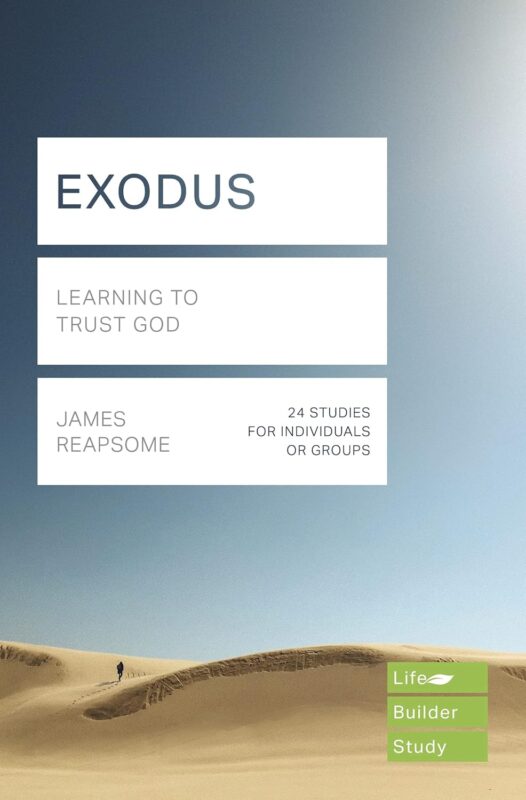
If you want something that walks you through this with daily prompts and guided questions, an Exodus-specific study workbook takes all the planning out of it and gives you somewhere to record what God is showing you as you go.
What Exodus Teaches Us About God
After 40 chapters, here is what Exodus has shown us:
He hears: God heard the cries of Israel in Egypt, and He hears yours.
Remembers: He remembered His covenant with Abraham, even after 400 years of silence.
He acts: the God of Exodus is not passive. He moves, delivers, fights
Provides: manna, water from a rock, quail in the desert, God provides for His people in the wilderness
Is present: the cloud, the fire, the tabernacle, God’s overwhelming desire in Exodus is to be with His people
He is holy: the encounter at Sinai, the instructions for worship, the weight of His glory in the tabernacle, Exodus shows us a God of breathtaking holiness
He uses ordinary people: Moses the stutterer, Miriam the girl at the river, a compassionate princess, a mother who let go
Your Exodus Bible Study Kit
Everything you need to study Exodus well:
📖 A Study Bible — the single best investment you can make in your Bible study
✍️ Bible study supplies kit — for the girl who writes through her Bible
📚 An Exodus Bible study workbook — guided questions for every chapter
🌸 A beautiful Bible study journal — because your conversation with God deserves somewhere beautiful to live
💕 A pretty Bible cover — protect the most important book you own in something as beautiful as what’s inside it
✝️ Cross necklace — faith worn close to the heart
💍 Cross ring — a quiet reminder on your hand
📿 Cross bracelet — for the Jesus girly who wears her faith
🎨 A Bible colouring book for Exodus — a creative and meditative way to engage with Scripture
Ready to Study Exodus?
Exodus is the book that proves God sees the suffering, hears the crying and moves on behalf of His people. It is the book of the burning bush and the Red Sea and the glory of God filling the tabernacle at the end.
It is also deeply personal. Because the God who delivered Israel from Egypt is the same God who delivers today. The same God who parts seas still moves in impossible situations. The same God who spoke from the burning bush still speaks in ordinary moments.
Your Exodus is not necessarily a sea or a pharaoh. But if there is something in your life that feels like it will never change, Exodus was written for you.
